Power & faults
How to increase the power of your electricity connection in Croatia (HEP ODS, step by step)
What does increasing the connection power mean?
Connection power (priključna snaga) is the power, in kilowatts, that your property’s connection is approved for, set in the electricity consent (EES) that HEP ODS, the electricity distribution operator, issues for it. Increasing the connection power (povećanje priključne snage) means asking HEP ODS for a new consent at a higher value and paying a fee for the added kilowatts.
The question comes up when a property needs more than its connection was given: air-conditioning units (klima-uređaji) in every room, a heat pump or a restaurant kitchen. If the current limiter (ograničavalo strujnog opterećenja) cuts out when everything runs at once, the connection is too small for that load; if one circuit trips, see why the power trips in summer.
Not every change at the meter is an increase. Under HEP ODS’s Rules on Connection to the Distribution Network (Pravila o priključenju na distribucijsku mrežu, July 2023), no new consent is needed for replacing the meter, fitting a current limiter, changing the tariff model or moving the metering cabinet, as long as the connection power and the number of metering points stay the same.
Single phase or three phases: which values can you choose?
The Distribution Network Code caps a single-phase connection at 11.5 kW, and a new three-phase connection starts at 11.04 kW. HEP ODS describes a single phase as the connection for households and premises with average needs, and three phases for buildings with large consumers such as electric heaters, heat pumps and machines with motors.
Each standard value is tied to the rating of the current limiter, as HEP ODS’s table of limiter ratings shows:
| Connection | Limiter rating | Connection power |
|---|---|---|
| Single phase | 20 A | 4.60 kW |
| Single phase | 25 A | 5.75 kW |
| Single phase | 32 A | 7.36 kW |
| Single phase | 40 A | 9.20 kW |
| Single phase | 50 A | 11.50 kW |
| Three phases | 3 × 16 A | 11.04 kW |
| Three phases | 3 × 20 A | 13.80 kW |
| Three phases | 3 × 25 A | 17.25 kW |
| Three phases | 3 × 32 A | 22 kW |
The table also lists uneven three-phase combinations, from 11.96 kW (16, 16 and 20 A) to 20.47 kW (25, 32 and 32 A). Above 11.5 kW a single phase is not allowed, so a larger connection has to be three-phase, with the large consumers shared out between the phases.
Who applies to HEP ODS, and with which documents?
The owner of the property, or the holder of another real right over it, files form PM-1.2.1 (Zahtjev za izdavanje EES) and ticks the power increase. HEP ODS recommends filing through its Moja mreža application; post or a visit to the counter also work. Anyone filing for the owner, an electrician included, needs a power of attorney.
A change of phase (promjena faznosti) is ticked on the same form. For a power increase, the form itself asks for:
- a cadastral extract or a base plan with the building drawn in;
- proof of ownership or of another real right;
- the written consent of the co-owners (suvlasnici), if there are several;
- the power you want in both directions, from the network and into it, picked from the standard values above for anything up to 22 kW;
- a certificate of usability (potvrda o uporabljivosti), if work is done on the existing installation.
For properties in the city the competent unit is Elektrojug Dubrovnik, at Nikole Tesle 3. Its contact page lists a free information line, 0800 300 416, a number for calls from abroad, +385 20 46 81 11, and the email info.dpdubrovnik@hep.hr; check the counter’s opening hours before you go in person.
What happens after you apply, step by step?
Under the 2023 Rules, HEP ODS has 15 days from a complete request to issue the electricity consent with a connection offer and an updated annex to your network-use contract. You pay the fee, HEP ODS carries out the works on the connection and the metering point, and from then on the higher power is yours to use.
| Step | Who acts | What happens | Time limit in the 2023 Rules |
|---|---|---|---|
| 1. Check the installation | You and your electrician | Choose the power; check the main line, board and circuits | None set |
| 2. File the request | The owner, or an agent with a power of attorney | Form PM-1.2.1 with its attachments | None set |
| 3. Completeness check | HEP ODS | Asks in writing for anything missing | Within 8 days; you then have 15 days |
| 4. Consent and offer | HEP ODS | Consent, connection offer, updated network-use annex | 15 days from a complete request |
| 5. Payment | The owner | Pays the fee in the offer | The consent is valid for two years |
| 6. New power | HEP ODS | Works on the connection and metering point | After the fee is paid |
A request left incomplete is rejected within a further 15 days, and a consent that is part of a location or building permit follows that permit’s validity. These are deadlines in the rules, not measured waiting times, so leave a margin before the season.
This short route is for an existing user on one metering point whose change needs no building permit or main design. Under the rulebook on simple buildings and works as published in 2017, renewing the electrical installation of an existing building with up to three units, or up to 600 m², needs neither; the rulebook has been amended since, so check the current text. A connection that needs new technical conditions in the network follows the longer, complex procedure (složeni priključak).
How is the fee for extra power worked out?
HERA, the Croatian Energy Regulatory Agency, sets one unit price per kilowatt for connections to the low-voltage network, the same across Croatia. HERA explains that for an existing connection the price applies to each kilowatt you add, counting the larger of the power you take and the power you feed in. The current decision has applied since 1 May 2026.
The decision sets the price without VAT, and HERA’s own explanation sets out the calculation. The amount itself is in the connection offer from HEP ODS, which is the figure that counts. Worked examples from before May 2026 use the earlier price, such as the one on HEP ODS’s page on simple connections as archived in December 2025.
If you disagree with how a request is handled, HERA, the independent regulator, hears complaints (prigovor) about system operators under the Energy Activities Regulation Act. The fee is for connecting to the network; work on your own installation is quoted separately, ours in writing (how we price).
What must be ready on your side of the meter?
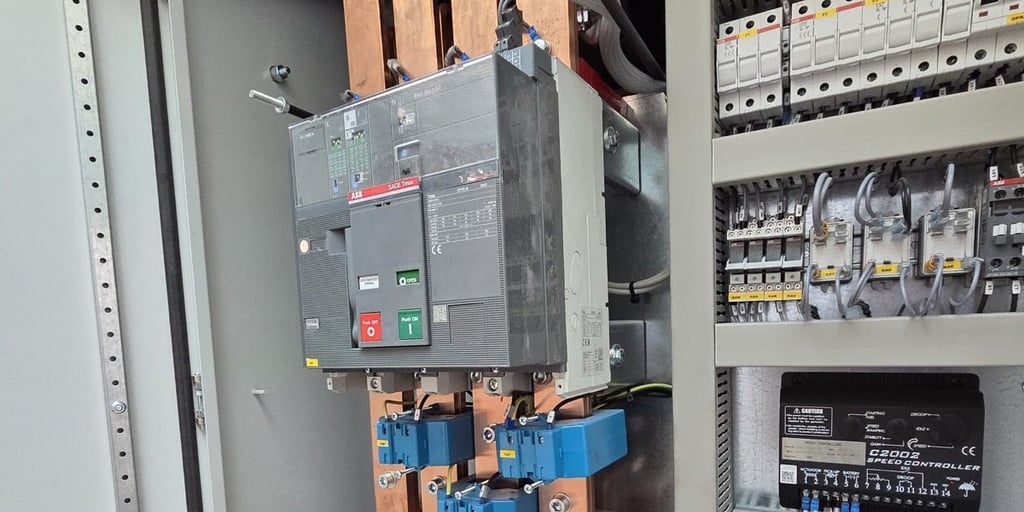
Everything after the metering cabinet is yours: the main line (glavni vod) to the property, the distribution board and every circuit. The General Conditions for network use and electricity supply make you responsible for the safety and technical correctness of that installation, so the cable, the main switch and the board must be able to carry the extra power.
The 2023 Rules draw the same line: external connections belong to HEP ODS, the main line from the metering cabinet belongs to you. Under the General Conditions, a defect on your side lets HEP ODS set a deadline in writing, suspend the supply and reconnect after proof of the repair. Before the request goes in, an electrician checks:
- the main line, whose cable has to be sized for the new current;
- the main switch (glavni prekidač) and the incoming protection, rated for the new current;
- the distribution board (razvodni ormar): room for new circuits, residual current devices (RCDs; zaštitna strujna sklopka, FID) where they are missing and, on three phases, the load spread evenly.
If the installation is altered, the request needs the certificate of usability from the contractor who did the work, with a statement on the final inspection and testing. On HEP ODS’s form PM-2.2, the tester declares under material and criminal liability that the installation was tested in line with the consent and the technical rules, listing the instruments used, with their calibration certificates, and the reference of the test report (zapisnik o ispitivanju). Ask about these documents when you request the quote.
This side of the meter is where we work, from boards for homes and venues to main switches, busbars and higher-power connections for commercial premises (power installations). Buying? Check the board before you sign (what an electrical inspection should check). Renewing it? Add surge protection before the storm season.
What is changing in the connection rules in 2026 and 2027?
The Electricity Market Act was amended in October 2026 (NN 114/2026, in force since 15 October). HEP ODS has six months to align its 2023 connection rules, operators must accept connection requests digitally, and they must tell applicants the status of a request at least every three months. Check the current procedure before you file.
The amending act also repealed the 2018 regulation on energy consents, whose deadlines the 2023 Rules repeat. HEP ODS’s pages are quoted from archived copies dated 2024 to 2026, as its website could not be reached when this guide was written; where your consent, your offer or the current rules differ, they prevail.
To have your side checked first, describe the job on the quote form, or send a photo of the board and the meter on WhatsApp at +385 95 506 8145.
Quick answers
Who can apply to HEP ODS for more connection power?
The owner of the property or the holder of another real right over it. An electrician, a property manager or a relative can file only with the owner's power of attorney, and if the property has several owners the request needs the written consent of the co-owners.
How long does HEP ODS take to issue the consent?
HEP ODS's 2023 connection rules give it 15 days from a complete request, a deadline rather than a measured waiting time. If something is missing, it must ask within 8 days and give you 15 days to complete the request. The October 2026 amendment to the Electricity Market Act gives HEP ODS six months to align these rules.
How is the fee for a power increase calculated?
HERA explains it as its unit price per kilowatt, the same across Croatia and set without VAT, multiplied by the kilowatts you add. The decision in force since 1 May 2026 sets the price, and the connection offer from HEP ODS states the amount you pay.
Do I need a new consent to replace the meter or the limiter?
No, as long as the connection power and the number of metering points stay the same. Replacing the meter, fitting a current limiter, changing the tariff model or moving the metering cabinet are done by HEP ODS without a connection procedure.
When is a single-phase connection no longer enough?
Above 11.5 kW, the cap the Distribution Network Code sets for a single phase. A larger connection must be three-phase; the smallest standard three-phase value is 11.04 kW, and the change of phase is requested on the same form as the increase.
What does the electrician do in this process?
The work on your side of the meter: checking and, where needed, renewing the main line, the main switch, the distribution board and the circuits so that they carry the new power. HEP ODS works on the connection and the meter. Ask about the certificate of usability when you request the quote.