Buying & owning
Buying an apartment in Dubrovnik: what an electrical inspection should check
A flat is bought for its view, its light and its street, but the wiring behind the walls decides how safe and comfortable it will be to live in or to let. An electrical inspection before buying an apartment tells you whether the installation is sound, what it lacks and what putting it right would involve, while you can still ask questions.
This guide is for buyers anywhere in Dubrovnik, from the Old Town to Lapad, Gruž and Mokošica, and especially for owners who will not live here all year. Where a rule comes from Croatian law or an official body, the source is linked. The work itself is described under fault finding and repair on our main page.
Why get an electrical inspection before buying an apartment?
Because the installation becomes yours, together with its faults and its paperwork. Croatian rules make the owner responsible for maintaining it and for keeping its inspection records, and a hidden problem such as missing protection or damaged insulation is far better found before you sign than in the first summer of air-conditioning.
Electrical installations in Croatian buildings are governed by the Technical Regulation for Low-Voltage Electrical Installations (Tehnički propis za niskonaponske električne instalacije) of January 2010, which makes the HRN HD 60364 series of standards the binding basis for designing and testing an installation. The Building Act in force since 1 January 2026 keeps that regulation in force until new rules replace it, obliges the owner to maintain a building so that its fundamental requirements are preserved, and fines owners who fail to.
Three duties from the regulation pass to you with the keys:
- Regular inspections. The longest gap allowed is fifteen years for residential buildings and four years for buildings of public use and all other buildings, unless the design or another regulation sets a different interval.
- Inspections after changes. Every change to the installation, and any extraordinary event that may have affected it, calls for an extraordinary inspection.
- Records kept for good. The owner must keep the inspection and maintenance documents permanently.
The Fire Protection Act adds a duty for owners, users and building managers to keep electrical installations in working order and to hold documentation of their maintenance.
Age matters too. Until the end of 2010, installations could still be built to the former Yugoslav-era rulebook, which then ceased to be used. An older installation is not unsafe by definition, but only measurements show its real condition, and whether it needs repairs or rewiring (rekonstrukcija instalacije), partly or fully.
What should a pre-purchase electrical inspection check?
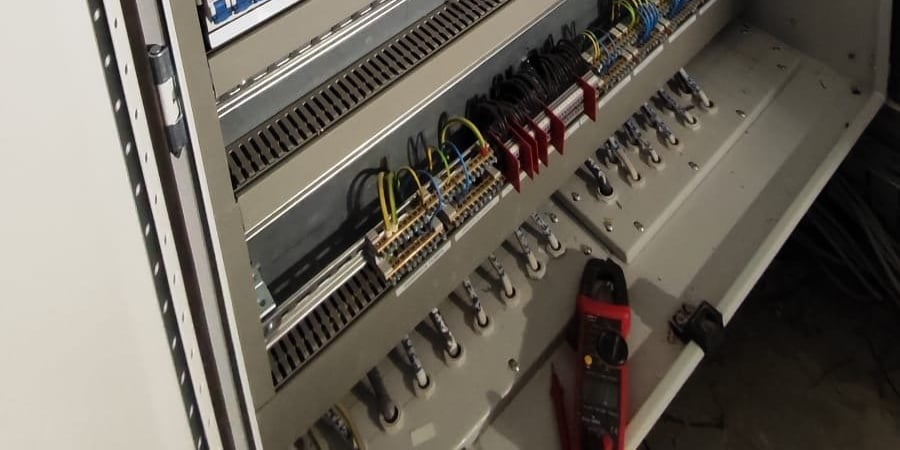
A useful inspection combines a visual check with measurements. The electrician opens the distribution board, looks at the protective devices, cables, sockets and fittings, then measures the circuits as the HRN HD 60364-6 verification standard describes: protective conductors, insulation resistance, fault-loop impedance, the residual current devices and the earthing.
The regulation asks the same of every regular inspection: at least a visual check and measurements, with the results entered in a record.
| Part of the installation | What is checked | What it tells you |
|---|---|---|
| Distribution board | Protective devices, labels, signs of heat, free space for new circuits | Whether the board can stay or should be replaced |
| Residual current devices (RCDs) | A trip test with an instrument, and which circuits each one covers | Whether people are protected against electric shock |
| Protective conductors and earthing | Continuity to every circuit, and earth resistance where it can be reached | Whether metal parts and appliances are safely earthed |
| Insulation | Insulation resistance, circuit by circuit | Cables that are damaged, aged or damp |
| Fault-loop impedance | Measured on each circuit | Whether a fault will switch the circuit off quickly enough |
| Sockets, switches and lighting | Condition, heat, loose fittings, earthing contacts | Wear that a quick look can miss |
| Main line and connection | The cable from the meter to the board, the connection power, the phases | Whether the supply fits the way you will use the flat |
| Records | Test reports, dates of inspections, the list of circuits | What has been done, when and by whom |
The measurements follow HRN HD 60364-6:2016, the verification standard the Croatian Standards Institute (HZN) adopted in 2016. The testing and diagnosis (mjerenje i dijagnostika) is done circuit by circuit, which is also how the cause of a fault is traced.
The distribution board
The distribution board (razvodni ormar, the fuse box to many owners) is where the inspection starts. Circuit breakers rather than screw-in fuses (Croatian calls both osigurači), residual current devices and every circuit (strujni krug) labelled are good signs; scorched terminals, a smell of hot plastic, missing labels or cables squeezed in without room are not. The electrician also looks for a main switch (glavni prekidač), for surge protection (prenaponska zaštita) and for space to add circuits for air-conditioning units (klima-uređaji) or a new kitchen.
RCDs and the 30 mA rule
The residual current device (zaštitna strujna sklopka, FID) switches off when current leaks to earth, for example through a person. HRN HD 60364-4-41:2017, the standard on protection against electric shock, holds the rule for this additional protection, and the initial-verification checklist of HRN HD 60364-6:2016 lists where it applies: RCDs of no more than 30 mA for sockets rated 20 A or less used by ordinary people (with stated exceptions), for circuits supplying mobile equipment outdoors up to 32 A, and for cables concealed in walls less than 50 mm deep.
That is a requirement of the standards the regulation makes binding, not a separate line in the law. A board with no RCD at all, or with one that does not trip when tested, is among the first things to put right. Bathrooms have their own part of the standard series, HRN HD 60364-7-701, and sockets on a terrace or balcony belong behind a 30 mA RCD too.
What you can spot on a viewing
Some signs show before any instrument comes out:
- breakers or RCDs that the seller says trip now and then;
- warm sockets, switches or plugs, or scorch marks around them;
- lights that dim when the kettle or the air-conditioning starts;
- extension leads feeding the air-conditioning or the kitchen;
- a board with no labels, or no RCD at all.
None of these proves the installation unsafe, but each deserves a question and a measurement. Tripping in the hot months has its own guide: why the power trips in apartments in summer.
Which documents should the seller hand over?
Ask for the test reports (zapisnik o ispitivanju, often called the atest) from the last inspection and any later work, a list or diagram of the circuits, and any HEP ODS documents for the connection. A new installation must be tested before use and the owner must keep inspection records permanently, so a gap is worth noting.
The regulation makes a final inspection and test of every new installation compulsory, carried out with measuring instruments to HRN HD 60364-6, with a record kept. The installation only counts as fit for use once the results comply and the records exist. A good document set for a flat looks like this:
- Test reports with dates, who carried out the tests, the instruments used and the results for each circuit.
- A circuit list or a diagram of the board that matches the labels inside it.
- Paperwork for recent building work: the Building Act requires the contractor’s written statement on the works and a maintenance programme for the building and its installed equipment.
- HEP ODS documents for the connection, such as an electricity consent (elektroenergetska suglasnost, EES), which help to confirm the connection power and the number of phases.
Missing records do not mean the installation is unsafe. They mean nobody can show that it is safe until it is measured. What a complete set should look like after future work is set out in the handover documents you should insist on.
If you plan to let the flat, the rulebook for categorising private accommodation asks only for electricity with lighting that gives good visibility in every room; its 2016 consolidated text has no test-report requirement. Whether a let flat counts as residential (fifteen years) or as another building (four years) is not settled in any official text we have read. The owner’s side of letting is covered in holiday-rental electrical safety in Croatia.
Is the connection power enough for how you will use the flat?
Check it before you plan air-conditioning in every room, an induction hob or a heat pump. The current limiter on your HEP ODS connection sets the connection power, and single-phase connections stop at 11.5 kW. It can be raised, but the owner files the request, so a buyer plans it for after the purchase.
HEP ODS, the electricity distribution operator, works locally through its Dubrovnik unit, Elektrojug. It limits the connection power of a flat with a current limiter (ograničavalo strujnog opterećenja), and its standard table of limiters pairs each limiter with a connection power:
| Limiter | Single-phase connection | Three-phase connection |
|---|---|---|
| 16 A | not listed | 11.04 kW |
| 20 A | 4.60 kW | 13.80 kW |
| 25 A | 5.75 kW | 17.25 kW |
| 32 A | 7.36 kW | 22 kW |
| 40 A | 9.20 kW | not listed |
| 50 A | 11.50 kW | not listed |
The Distribution Network Code caps single-phase connections at 11.5 kW and sets the minimum for a new connection at 4.6 kW single-phase and 11.04 kW three-phase. HEP ODS explains that single-phase suits households with average needs, while three-phase is meant for buildings with large consumers such as electric heaters, heat pumps and machines with electric motors. A small connection shows its limits on a hot afternoon, when several air-conditioning units, the hob and the water heater run at once.
Your side of the meter
The 2023 HEP ODS connection rules make the main line (glavni vod) from the metering cabinet to your installation the property and the responsibility of the network user. The General Conditions for network use make the user responsible for the safety, operation and technical correctness of their own installation; if the operator finds a defect, it gives written notice and a deadline, can suspend the supply, and reconnects once the repair is proven. So the cable from the meter to your board belongs in the inspection.
Raising the connection power
Increasing the connection power (povećanje priključne snage) means asking HEP ODS for a new electricity consent. Under the same rules the owner, the holder of another real right or an agent with a power of attorney files the request, on form PM-1.2.1, with a cadastral extract or base plan, proof of ownership, the co-owners’ written consent where there are several, and a certificate of usability (potvrda o uporabljivosti) if work is done on the installation. HEP ODS then has 15 days from a complete request to issue the consent with a connection offer, and the higher power is available once the fee is paid and the work on the connection and the meter is done.
The fee is based on a unit price per kW that has been the same across Croatia since 1 May 2026, and HERA, the energy regulator, explains that for an existing connection it is multiplied by the kilowatts added. HEP ODS’s offer gives the figure for your flat. An October 2026 amendment to the Electricity Market Act gave HEP ODS six months to align its connection rules, so check the current procedure before you file. On your side of the meter, we prepare the installation and the board for the new power, as the power installations section shows. The whole procedure is in how to increase the power of your electricity connection.
What changes if the apartment is in the Old Town?
Almost everything needs more planning. The walls are stone masonry, and many blocks have been grouted and tied; the Old Town is on the World Heritage List, so a national exemption for replacing installations does not apply; exterior work needs conservation approval and pauses in summer; and motor traffic enters the pedestrian streets only with approval.
Stone walls and cable routes
Between 2000 and early 2021, the Institute for the Restoration of Dubrovnik (Zavod za obnovu Dubrovnika) strengthened 45 building blocks in the historic core, more than 200 buildings, by grouting the stone masonry, whose voids can reach a fifth of the wall volume, repointing the joints and tying each block with tensioned steel at floor level. Walls like these are not cut lightly, so in the Old Town the inspection also asks where the cables run and whether shafts, ceiling voids or floors can carry new ones. Network and TV cables raise the same question, covered in Wi-Fi and cabling in stone houses.
Conservation approval, inside and out
On the text of the 2024 Act on the Protection and Preservation of Cultural Goods, interior works in non-listed buildings inside protected ensembles, the replacement and repair of installations included, are exempt from conservation approval, but not in ensembles on the World Heritage List, and the Old Town is one. Before a rewiring there, ask the conservation department (konzervatorski odjel), now the Regional Conservation Service Dubrovnik of the Ministry of Culture and Media, whether your job needs an approval. The Act gives the Ministry 15 working days to decide on a complete application, and an approval is valid for five years.
Outside, the rules are firmer. The City’s Communal Order Decision requires the conservation department’s prior approval for all exterior work on a building that is a cultural good or lies within the protected ensemble, and it bans construction work on facades and exterior parts of buildings, scaffolding included, in the historic core from 15 June to 15 September. The 2008 protection measures for zone A, the area that matches the World Heritage property, are reproduced in the City’s management plan for the World Heritage site: they do not permit new installation elements on facades, naming external air-conditioning units, satellite dishes and inappropriately executed lighting. The Communal Order also gave owners of air-conditioning units in the core five years from 2020 to make them invisible from public space, so if the flat you like has a unit on the street side, ask about it before you buy. Outside the walls, the exterior rule applies to any building that is itself a cultural good or lies within the protected ensemble.
Access and materials
The historic core is a pedestrian zone where motor traffic needs the City’s approval: under the City’s unofficial consolidated text of the Communal Order, with amendments to 2021, motor access for maintaining electrical installations can be approved only for four streets, between 05:00 and 07:30. That shapes the plan and the quote. On facades and roofs in narrow streets we work by rope access rather than from scaffolding, which in the core takes time, needs a permit to occupy public space and closes the passage. The Old Town section of our main page and the guide to facade lighting and cameras by rope access go further.
What should you do with the findings?
Sort them into three groups: faults to fix before anyone uses the flat, gaps in protection or records to close soon, and upgrades for the way you will use it. A written quote for each group shows the scope before you sign, and gives you something concrete to discuss with the seller.
Fix first. Scorched terminals, damaged insulation, a broken protective conductor and RCDs that do not trip belong here. If you smell burning or see sparking at any point, switch off the main switch and call an electrician straight away.
Close the gaps. Missing RCDs, an unlabelled board or no test records. The board can often be replaced on its own: the old one comes out, the existing circuits are checked and the right protection goes in. A single fault on an otherwise sound installation is worth repairing; an old installation with no RCD and poor insulation readings is safer rewired, partly or fully. After any change the regulation calls for an extraordinary inspection, so plan the testing and the record as part of the job, and keep every report with the flat’s documents.
Plan the upgrades. Circuits for air-conditioning, a higher connection power, network cabling, keyless entry or cameras for a rental, and surge protection. Planned together, power and low-voltage cables can share the same routes and the walls are opened once.
In a building with several flats, work on the common parts, such as the stair lighting, may need the consent of the co-owners (suvlasnici) or the building manager (upravitelj zgrade). If the flat will be let, tell us the dates when it is free, so that the work can be planned around the guests.
How does an inspection with us work?
Send the address, the type of building and when the flat can be visited, with a photo of the distribution board if the seller allows it. We arrange a site visit, take instrument readings circuit by circuit, explain what we found and, where work is needed, quote it in writing, with labour and materials listed.
- Message us on WhatsApp, call +385 95 506 8145 or use the quote form, say that it is a check before a purchase, and mention your plans: letting, air-conditioning, a new kitchen.
- Site visit (pregled objekta), arranged by message or phone. If you are abroad, tell us who can open the flat, such as the seller or the agent.
- Measurements and explanation: we go through the board and the circuits and tell you in plain words what we found.
- Written quote (ponuda) for any work, listing labour and materials, with the payment terms stated on it.
- Work and handover (predaja radova), if you go ahead: every circuit labelled, and an explanation of what was done.
Electro Access works 07:00–16:00, Monday to Friday; messages can be sent at any time and are answered in working hours. We cover the City of Dubrovnik from the Old Town to Mokošica; outside the city on request. The steps are described in more detail under how a job runs.
Quick answers
What does an electrical inspection of an apartment include?
A visual check of the distribution board, sockets, switches and fittings, and measurements on every circuit as the HRN HD 60364-6 standard describes: continuity of the protective conductors, insulation resistance, fault-loop impedance, a trip test of each residual current device and, where it can be reached, the earthing. It should also cover the cable from the meter and the connection power.
Which electrical documents should I ask the seller for?
The test reports (zapisnik o ispitivanju, often called the atest) with their dates, a circuit list or diagram that matches the board, the contractor's written statement for any recent building work, and HEP ODS papers for the connection, such as an electricity consent (EES). Croatian rules make the owner keep inspection records permanently, so a missing report is worth a question.
How often must the wiring in a flat be inspected in Croatia?
At least every fifteen years for a flat: the 2010 technical regulation sets that longest gap for residential buildings, and four years for buildings of public use and all other buildings, unless the design or another regulation sets a different interval. Every change to the installation also calls for an extraordinary inspection, and no official text we have read settles whether a let flat counts as residential.
Can I increase the connection power after buying?
Yes. The owner, or an agent with a power of attorney, asks HEP ODS for an electricity consent (EES) on form PM-1.2.1, with proof of ownership, a cadastral extract, the co-owners' consent where there are several and, if the installation is altered, a certificate of usability. The rules give HEP ODS 15 days to issue the consent once the request is complete.
Does rewiring a flat in the Old Town need conservation approval?
It may. The national exemption for replacing installations inside non-listed buildings in protected ensembles does not apply to ensembles on the World Heritage List, and the Old Town is one, so ask the conservation department before work starts. Work on the exterior needs its prior approval, and work on facades is banned from 15 June to 15 September.
Can you check an apartment before I buy it?
Yes. We visit the flat, take instrument readings circuit by circuit, explain what we found and quote any work in writing, with the labour and the materials listed. We work 07:00–16:00, Monday to Friday, across the city from the Old Town to Mokošica. Send the address and, if you can, a photo of the distribution board.