Power & faults
Why the power trips in Dubrovnik apartments in summer: air-conditioning load, old boards, RCDs
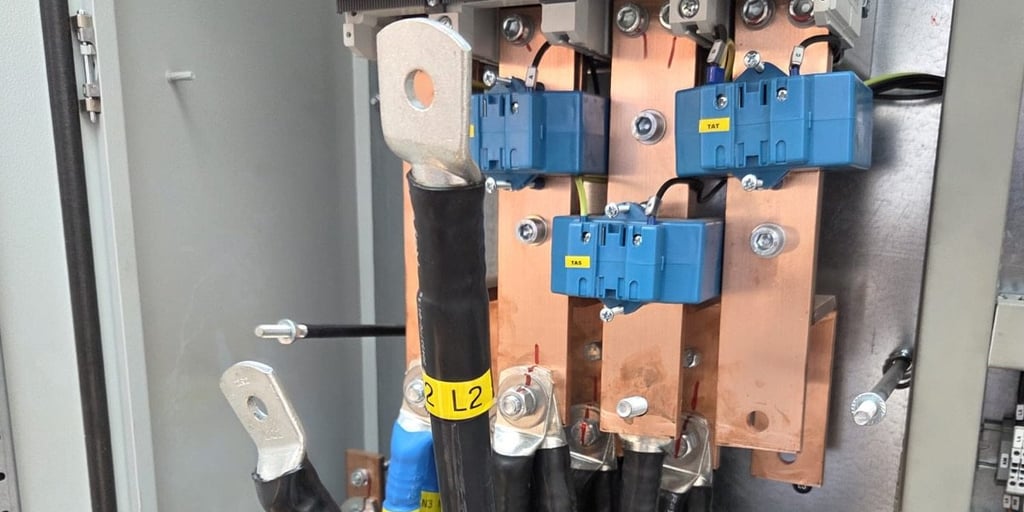
In July and August, the air-conditioning (klima-uređaj) in a flat may run in every room from late afternoon into the night, and that is when switches on the distribution board (razvodni ormar, the “fuse box”) start to drop. A trip is a protective device doing its job. The useful question is which device tripped and why, because each one points to a different cause and a different fix.
Why does the power trip more often in summer?
Because the load is highest and lasts longest. From June to September air-conditioning runs for hours, often overnight, on top of the water heater, the oven and the kettle. Circuits, the board and the connection all have limits, and a weakness that went unnoticed in spring shows itself in the heat.
The climate explains the calendar. For 1961–2024, DHMZ, the national meteorological service, gives the Dubrovnik station an average of 30 warm days (a maximum of 25 °C or more) in July and 29 in August, and hot days of 30 °C or more in every month from June to September: 3, 11, 13 and 2. In the 1971–2000 normals the city also averaged 69 tropical nights a year, when the temperature stays at 20 °C or above, about 23 of them in each of July and August: nights when the air-conditioning tends to stay on until morning.
Summer 2026 pushed further. In its preliminary analysis of the 2026 heat waves, DHMZ counted 17 consecutive days of a health-affecting heat wave in Dubrovnik, a record for the station. The whole grid feels it. Figures from HOPS, the transmission system operator, show that Croatia set its all-time hourly electricity consumption record in August 2026, at 21:00, and that summer peaks now exceed winter ones. HEP says summer load is highest between 20:00 and 22:00 and shifts sharply towards the tourist coast.
Which switch tripped: a circuit breaker, the RCD or the limiter?
Look at the board before you reset anything. One circuit breaker (osigurač) down points to an overloaded or faulty circuit. A residual current device (RCD; zaštitna strujna sklopka, or FID) down points to current leaking to earth. If no breaker or RCD has dropped but the flat is dark, look further up the line.
| What you see | What tripped | Usual cause | What to do |
|---|---|---|---|
| One switch down, the rest of the flat has power | A circuit breaker | Too much load on that circuit, or a fault on it | Switch off what was starting on that circuit, then reset once |
| An RCD down, several circuits dead at once | The RCD | Current leaking to earth from a faulty appliance, damp or damaged insulation | Unplug the likely culprits, then reset once |
| Breakers and RCDs all up, the whole flat dark | The main switch, the HEP ODS limiter or the supply | Total load above the connection power, or a supply failure | Check the main switch and whether the neighbours have power |
| A switch that drops again as soon as you reset it | Any of them | A fault, not an overload | Leave it off and call an electrician |
Older boards may have screw-in fuses instead: a blown fuse is replaced, never reset, and only with one of the same rating, because a stronger fuse takes away the protection the cable needs.
How much air-conditioning can one connection carry?
As much as the connection power agreed with HEP ODS, the electricity distribution operator, allows, and its current limiter (ograničavalo strujnog opterećenja) is matched to that figure. A single-phase connection is capped at 11.5 kW, and new connections start at 4.6 kW for single-phase and 11.04 kW for three-phase. Everything running at once counts against it.
Those thresholds come from the distribution network code, and HEP ODS, whose unit for the city is Elektrojug Dubrovnik, publishes the limiter rating for each connection power:
| Connection | Current limiter | Connection power |
|---|---|---|
| Single-phase | 20 A | 4.60 kW |
| Single-phase | 25 A | 5.75 kW |
| Single-phase | 32 A | 7.36 kW |
| Single-phase | 40 A | 9.20 kW |
| Single-phase | 50 A | 11.50 kW |
| Three-phase | 3 × 16 A | 11.04 kW |
| Three-phase | 3 × 20 A | 13.80 kW |
| Three-phase | 3 × 25 A | 17.25 kW |
| Three-phase | 3 × 32 A | 22 kW |
To see how close you are, add up the rated input power, shown on each appliance’s rating plate, of everything that may run at once: the air-conditioning units, the water heater, the oven and hob, the dishwasher, the kettle. If the total comes near the connection power, the limiter can cut out when everything runs together on a hot evening; on a three-phase connection, each phase has its own limit. As one published HEP ODS electricity consent shows, the operator installs and seals the limiter itself, so it is never yours to adjust or bypass.
Either spread the load, running the water heater in the morning or on a timer and starting the air-conditioning units one after another, or ask HEP ODS to increase the connection power (povećanje priključne snage), as how to increase the power of your connection explains step by step. On your side of the point of delivery, the general conditions for network use make you responsible for the safety, operation and technical correctness of your own installation.
Why do old boards and circuits struggle with summer loads?
Because heat and long hours of current find the weak points. An installation laid out before every room had an air-conditioning unit may share one circuit between several rooms, run on tired or undersized cables, or have loose terminals that warm up under load. Some older boards have no RCD at all, a safety problem in its own right.
Watch for the signs that often come before a serious fault:
- circuit breakers or RCDs that trip often;
- sockets, switches or plugs that get warm;
- lights that flicker or dim when a large appliance starts;
- scorch marks on sockets or inside the board.
If you smell burning or see sparking, switch off the main switch (glavni prekidač) and call an electrician straight away.
The technical regulation for low-voltage installations that replaced the Yugoslav-era rulebook in 2010 treats every change to an installation, such as a new circuit for an air-conditioning unit, as a reason for an extraordinary inspection, and sets regular inspections at least every 15 years for homes and every 4 years for other buildings.
When an installation is worn out, the answer is partial or full rewiring; when the board is the weak point, a new board with the right protection and a label on every circuit. Power installations shows what a new board includes.
Why does the RCD trip, and why should you never bypass it?
An RCD compares the current flowing out on a circuit with the current coming back and switches off when too much of it leaks to earth, as it would through a person touching a live part. The usual causes are a faulty appliance, damp in a junction box (razvodna kutija) or outdoor socket, or damaged insulation.
Summer brings more possible culprits into use: outdoor units, terrace sockets and lighting, appliances that stood idle all winter. Small leaks also add up, so a flat with one RCD for everything trips more easily than one with its circuits split across two or more.
On new work the protection is not optional. The technical regulation makes the HRN HD 60364 wiring standards the basis for design, and HRN HD 60364-4-41, the part on protection against electric shock, covers additional protection by RCDs. The checklist for verifying a new installation in HRN HD 60364-6 lists RCDs of no more than 30 mA for socket-outlets up to 20 A used by ordinary people, for outdoor circuits supplying mobile equipment up to 32 A and for cables concealed less than 50 mm deep in walls.
Never tape the switch up, bridge it or swap it for a less sensitive one. Find the cause instead: switch circuits off and unplug appliances one at a time, then have the circuit measured, because an insulation-resistance test shows whether a cable or an appliance is leaking. If the trips started after a thunderstorm, surge protection in storm season covers what to check.
What should you do when the power trips?
Reset once, with the likely culprit switched off. If the switch holds, bring the load back one appliance at a time. If it drops again straight away, smells hot or shows scorch marks, leave it off and call an electrician: a switch that will not stay up is protecting you from a fault.
- Switch off the air-conditioning unit or appliance that was starting when the power went.
- Find the switch that has dropped: a circuit breaker, an RCD or the main switch.
- Reset it once. If it holds, switch appliances back on one at a time, starting the air-conditioning units a few minutes apart.
- If it drops again at once, leave it off, note the circuit and what was running, and call an electrician.
- If the whole flat is dark with no breaker or RCD down, check the main switch and whether the neighbours have power: a supply failure is for HEP ODS to fix.
Work inside the board is not a job for a handyman: Croatia’s rulebook on safety at work with electrical energy requires installation, maintenance and testing to be done by workers with an electrotechnical qualification. In a holiday rental it is the guests who stand at the board, so label every circuit and leave a short note in the house guide; holiday-rental electrical safety covers the owner’s other duties.
Electro Access finds faults by measurement, circuit by circuit, and repairs the cause rather than the symptom. We take urgent call-outs for electrical faults: fault calls are taken Monday to Friday, 07:00–16:00, and on the call we tell you when we can come. Tell us what trips, since when and what was running, and send a photo of the board if you can, on WhatsApp or at +385 95 506 8145. Fault finding and repair explains how we work, and every repair or rewiring is quoted in writing.
Quick answers
Why does my power trip only when the air-conditioning is on?
Usually because the units push a circuit, or the whole flat, past its limit. If one circuit breaker drops, that circuit is overloaded or faulty; if the whole flat goes dark with no breaker or RCD down, the total load may be above the connection power. A unit that trips the RCD every time it starts may itself be faulty.
Can I fit a bigger circuit breaker so it stops tripping?
No. A circuit breaker is sized to protect the cable behind it, so a bigger one can let the cable overheat without ever tripping. If a circuit is overloaded, the fix is to move load to another circuit or add a new one, sized, installed and tested by an electrician.
Is it the HEP limiter or my own board?
If a circuit breaker or RCD in your own board has dropped, the cause is on your side. If none has and the flat is dark, check the main switch, then whether the neighbours have power. The connection is part of the HEP ODS network and the limiter is fitted and sealed by HEP ODS; the installation on your side of the point of delivery is your responsibility.
Why does the RCD trip when nothing seems to be switched on?
Some appliances are always connected: the fridge, the water heater, outdoor units and anything on standby. A fault or damp in one of them, or in a junction box or outdoor socket, can trip the RCD at any hour. Switching circuits off one at a time narrows it down, and a measurement of the circuit finds the cause.
What should guests in a rental do when the power trips?
Show them where the distribution board is, with a label on every circuit. Ask them to switch off the air-conditioning unit or appliance that was starting, reset the dropped switch once and call you if it drops again. Ask them never to hold a switch up or keep resetting the RCD.